When comparing concrete driveway quotes, homeowners should evaluate key specifications beyond just price. Look for concrete strength (3,500-4,000 PSI minimum), proper thickness (4-6 inches for residential), reinforcement details, site preparation methods, drainage solutions (minimum 1/8 inch slope per foot), joint placement plans, and warranty terms. Quality contractors provide detailed mix designs, all-encompassing drainage solutions, and 1-3 year workmanship guarantees. These technical details ultimately determine whether your driveway will crack prematurely or last for decades.
Expert Highlights
- Evaluate concrete mix specifications, checking for 3,500-4,000 PSI strength and proper water-cement ratio (0.45 or lower).
- Compare driveway thickness proposals (4-6 inches residential, 6 inches heavy-duty) and reinforcement methods specified.
- Review site preparation details including excavation depth, soil compaction plans, and drainage solutions with 1/8 inch per foot slope.
- Examine joint placement specifications, ensuring 8-15 feet spacing and appropriate materials for your climate conditions.
- Check warranty terms, comparing workmanship coverage periods and what types of damage are included or excluded.
Concrete Strength and Mix Design Specifications

When discussing concrete for residential driveways, the mix design and strength specifications serve as the foundation for long-term performance and durability. Homeowners should specifically request a minimum compressive strength of 3,500-4,000 PSI, which prevents premature cracking and surface deterioration in freeze-thaw climates.
Quality contractors will provide detailed mix specifications including water-cement ratio (ideally 0.45 or lower), aggregate size (typically 3/4″ for driveways), and appropriate air entrainment (5-7% for cold climates). Without these specifications clearly defined, homeowners risk receiving substandard concrete vulnerable to scaling, spalling, and structural failure within just a few seasons.
When comparing quotes, ask each contractor to document their concrete mix design in writing. Reputable professionals readily provide this information, while evasive answers often signal corners may be cut during installation, ultimately leading to costly repairs.
Thickness and Reinforcement Details

Although many homeowners focus primarily on surface appearance, the proper thickness and reinforcement of a concrete driveway directly determine its structural integrity and lifespan. Contractors should specify both the concrete thickness and reinforcement methods in their quotes, allowing for meaningful comparison between bids.
| Driveway Type | Recommended Thickness | Reinforcement Method |
|---|---|---|
| Residential | 4-6 inches | Fiber mesh or 6×6 wire mesh |
| Heavy-Duty Residential | 6 inches | #3 or #4 rebar grid |
| Commercial | 6-8+ inches | Engineered rebar configuration |
When evaluating quotes, homeowners should be wary of contractors proposing thinner slabs to reduce costs. A properly reinforced 4-inch driveway for standard vehicles will greatly outperform an unreinforced 5-inch slab, especially in regions with freeze-thaw cycles or poor soil conditions.
Site Preparation and Subgrade Requirements
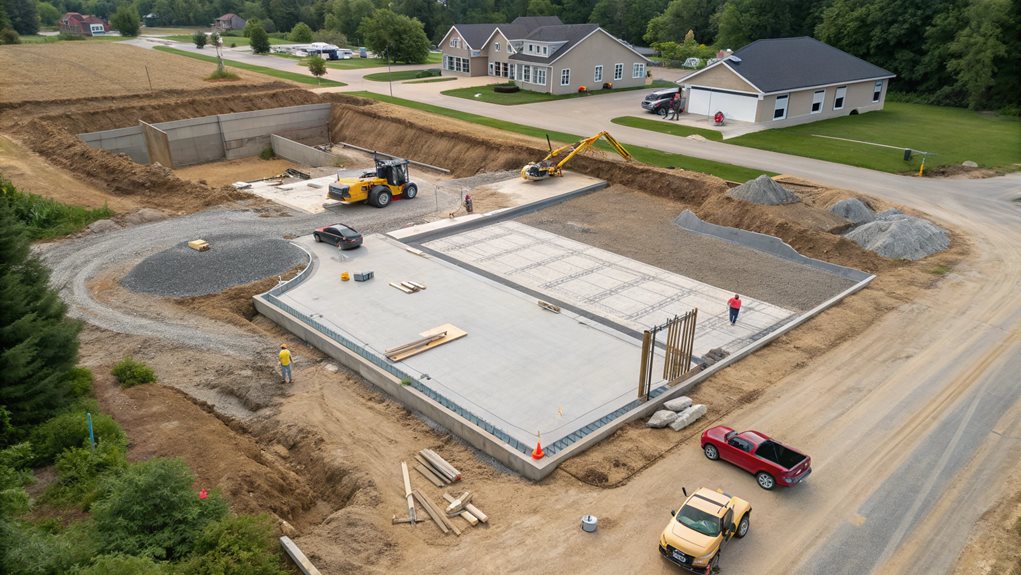
Site preparation creates the critical foundation for a long-lasting driveway, beginning with proper soil compaction to prevent future settling and cracks. Contractors should specify excavation depth requirements, typically 8-12 inches below final grade, removing all organic material and unstable soil before adding compacted base layers. Quality quotes will detail drainage solutions such as proper slope (minimum 1/8 inch per foot), perimeter drains, or swales to direct water away from the driveway surface and prevent erosion beneath the concrete or asphalt.
Proper Soil Compaction
Establishing proper soil compaction forms the foundation of a durable, long-lasting driveway that resists settling, cracking, and premature deterioration. When contractors skip this vital step, homeowners often face expensive repairs within just a few years. Professional contractors will evaluate the existing soil conditions and implement appropriate compaction techniques using mechanical equipment rather than hand tools.
Three essential soil compaction specifications to verify in contractor quotes:
- Minimum 95% soil density compaction rate measured with proper testing equipment
- Multiple compaction passes with vibratory equipment appropriate for your soil type
- Uniform compaction depth of at least 6-8 inches beneath the entire driveway surface area
Compare these specifications between quotes carefully, as proper compaction typically adds to initial costs but dramatically reduces long-term maintenance expenses and extends driveway lifespan by preventing soil movement beneath the concrete.
Drainage Solutions Included
Beyond proper soil compaction, effective drainage represents a fundamental element of driveway construction that can make or break the long-term performance of your investment. When comparing contractor quotes, look for detailed specifications regarding drainage solutions—not merely vague mentions of “proper drainage.” Quality proposals should outline specific measures like strategic grading with a minimum 2% slope away from structures, installation of French drains or catch basins in problematic areas, and perimeter drainage channels where appropriate. Without adequate drainage provisions, even perfectly installed concrete will deteriorate prematurely as water pools beneath the surface, causing erosion and freeze-thaw damage. This leads to cracking, settling, and eventual failure of the driveway structure. Contractors who incorporate thorough drainage solutions demonstrate foresight and commitment to lasting results, saving homeowners thousands in future repairs.
Excavation Depth Specifications
When examining driveway quotes, proper excavation depth specifications represent one of the most critical yet frequently overlooked aspects of site preparation. Inadequate excavation can lead to premature cracking, settling, and costly repairs within just a few years. Homeowners should make certain their contractor clearly specifies excavation depths based on soil conditions and local freeze-thaw cycles.
Quality contractors will include these essential excavation specifications:
- Total excavation depth (typically 8-12 inches for residential driveways)
- Subgrade compaction requirements (95-98% compaction rating)
- Base material specifications (crushed stone size and thickness)
Without these details, comparing quotes becomes nearly impossible since contractors may cut corners by reducing excavation depth. Remember that proper site preparation constitutes approximately 30% of your driveway’s longevity, making it an investment rather than an expense to be minimized.
Drainage Solutions and Slope Planning
Proper drainage and slope planning form the cornerstone of any well-designed driveway project, preventing costly water damage and premature deterioration of the surface. When comparing contractor quotes, make certain they specify a minimum slope of 1/8 inch per foot away from structures, which allows water to flow naturally without creating puddles or ice hazards during winter months.
Quality contractors will detail specific drainage solutions in their proposals, such as French drains, catch basins, or permeable materials. These elements, while adding to initial costs, greatly extend driveway lifespan by preventing erosion beneath the concrete foundation. Without adequate drainage planning, homeowners frequently face issues like cracking, settling, and frost heave that can necessitate complete driveway replacement within 5-7 years. Request that contractors explain their proposed drainage strategy with reference to your property’s unique topography and soil conditions.
Joint Placement and Expansion Control
Joint placement and expansion control represent critical elements of driveway installation that directly impact longevity and resistance to seasonal cracking. Contractors must calculate proper spacing between expansion joints based on concrete thickness, regional climate conditions, and anticipated load requirements, with typical recommendations ranging from 8-15 feet depending on slab dimensions. Material selection for joint fillers—whether using traditional asphalt-impregnated fiber strips, neoprene compression seals, or polyurethane sealants—should be specified in quotes with consideration for temperature fluctuation ranges and moisture exposure in your specific geographic location.
Proper Spacing Matters
As concrete gradually expands and contracts with temperature fluctuations, the strategic placement of joints becomes critical to preventing unsightly cracks and structural damage in driveways. Contractors should adhere to industry standards for proper joint spacing, which varies based on slab thickness and environmental conditions. When comparing quotes, homeowners should verify that contractors specify appropriate spacing measurements in their proposals.
Proper joint spacing requirements include:
- Control joints should be placed at distances equal to 24-30 times the slab thickness (typically 3-5 feet apart for residential driveways)
- Joints should create panels that are more square than rectangular, with a length-to-width ratio not exceeding 1.5
- All joints must be cut to a depth of at least 1/4 the slab thickness to function effectively
Inadequate joint spacing often leads to random cracking that compromises both appearance and durability.
Material Selection Considerations
When selecting materials for driveway joint construction, homeowners must weigh both functional requirements and aesthetic considerations to guarantee long-term performance. The proper selection of joint fillers, sealants, and expansion materials directly impacts how well a driveway withstands seasonal temperature fluctuations and heavy vehicle loads.
| Joint Material Type | Best Application | Longevity |
|---|---|---|
| Polyurethane Sealant | Expansion joints | 7-10 years |
| Silicone Sealant | Control joints | 10-20 years |
| Premolded Expansion Strip | Perimeter isolation | 15+ years |
Contractors often recommend flexible sealants for regions with extreme temperature variations, as these materials accommodate the concrete’s natural expansion and contraction. Meanwhile, homeowners in moderate climates may prioritize UV-resistant options that prevent premature deterioration, ensuring their driveway maintains both structural integrity and visual appeal for years to come.
Surface Finishing Options and Treatments
Various surface finishing options can dramatically transform both the aesthetic appeal and functional properties of a driveway installation. When evaluating contractor quotes, understanding available finishes helps homeowners make informed decisions that align with both design preferences and practical needs.
The right finish isn’t just about looks—it’s about creating a driveway that truly works for your lifestyle and home.
Contractors typically offer several primary finishing techniques:
- Broomed finish – Creates slight texture for improved traction in wet conditions while maintaining a clean, uniform appearance
- Exposed aggregate – Reveals decorative stones in the concrete for an upscale, textured look that effectively hides stains
- Stamped patterns – Impresses designs that mimic brick, stone, or other materials, allowing concrete to complement architectural styles
The challenge many homeowners face is balancing aesthetics with maintenance requirements. Solutions include selecting appropriate sealers that enhance both appearance and durability, extending the life of whichever finish is chosen.
Warranty Terms and Post-Installation Support
Understanding warranty terms and post-installation support represents a critical component of driveway investment protection that many homeowners overlook until problems emerge. When comparing contractor quotes, examine the specifics of what’s covered—structural cracking versus surface spalling—and for how long. Quality contractors typically offer 1-3 year workmanship warranties, while material warranties may extend 5-10 years with specific conditions.
Request detailed documentation about post-installation care requirements, including recommended sealant reapplication schedules and weight restrictions during the curing period. Contractors who provide maintenance guidelines and offer scheduled follow-up inspections demonstrate commitment to long-term satisfaction. Before signing, confirm if the warranty transfers to new owners should you sell your home, and whether warranty claims require professional inspection at your expense or the contractor’s. These details often separate premium contractors from budget alternatives.
Frequently Asked Questions
How Long Will the Driveway Installation Process Take?
The driveway installation process typically takes 1-2 weeks, including site preparation, forming, pouring concrete, curing time, and finishing work. Weather conditions may affect timing.
Can Vehicles Be Parked on a New Driveway Immediately?
No. Vehicles cannot be driven or parked on new concrete driveways for at least 7-10 days. This curing period guarantees the concrete reaches sufficient strength to bear weight safely.
What Maintenance Is Required for Concrete Driveways?
Concrete driveways require periodic sealing every 2-5 years, regular cleaning to prevent staining, crack repairs, and snow/ice removal using proper tools to prevent surface damage and guarantee longevity.
How Does Weather Affect the Concrete Installation Schedule?
Weather considerably impacts concrete installation, requiring temperatures above 40°F with no rain forecasted. Extreme heat, cold, or precipitation can delay projects and affect curing quality and durability.
Is Concrete More Expensive Than Asphalt or Pavers?
Concrete typically falls between asphalt (less expensive) and pavers (more expensive). While initial costs vary by region, concrete offers a middle-ground option balancing durability with affordability for community-minded homeowners.
Expert Final Thoughts
By comparing quotes based on concrete strength, thickness, site preparation, drainage, joint placement, finishing options, and warranty terms, homeowners can make informed decisions when hiring a contractor. These specifications directly impact driveway durability, appearance, and long-term value. Taking time to understand these technical elements guarantees quality results, prevents costly repairs, and provides peace of mind that the investment will withstand years of use.