When leasing office equipment, businesses often focus solely on monthly payments, overlooking total ownership costs including maintenance, supplies, and end-of-lease fees. Unspecified service response times can cause operational disruptions, while automatic renewal clauses may trap companies in extended contracts with outdated technology. End-of-lease return conditions frequently trigger unexpected charges, and many lessees fail to negotiate service rate caps or compare multiple vendor offers. Understanding these hidden pitfalls protects companies from costly financial consequences throughout the equipment lifecycle.
Expert Highlights
- Focusing solely on monthly payments instead of total cost of ownership conceals expenses like maintenance, supplies, and end-of-lease fees.
- Maintenance agreements often contain hidden costs for after-hours service and replacement parts that can significantly increase expenses.
- Unspecified service response times can lead to extended equipment downtime and operational disruptions.
- Long-term leases may lock you into obsolete technology without mid-lease upgrade options.
- Failing to document equipment condition at installation can result in unexpected damage charges at lease conclusion.
Overlooking Total Cost of Ownership Vs Monthly Payments
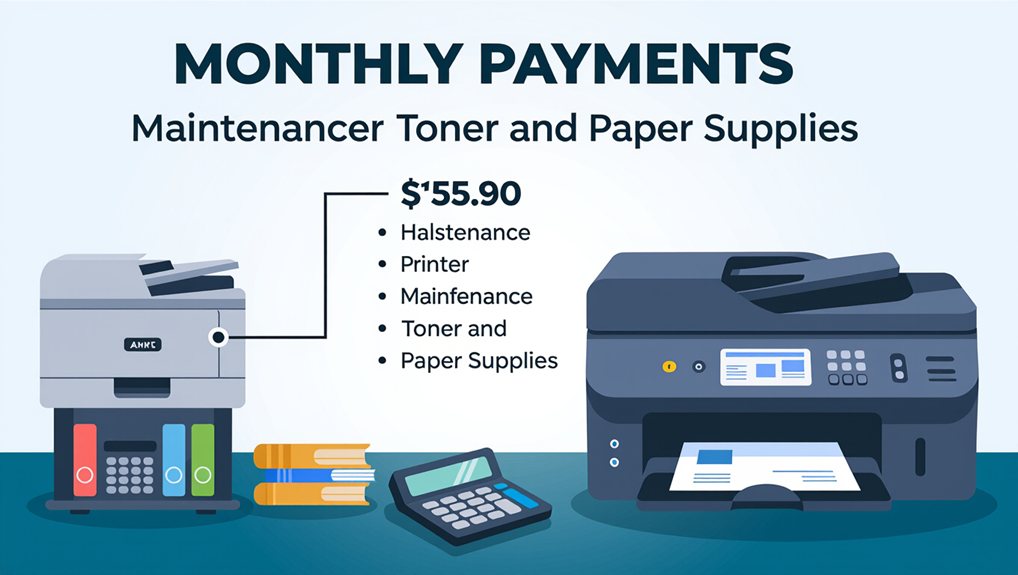
When businesses focus exclusively on the monthly payment for leased office equipment, they often fall into a costly financial trap that impacts their bottom line for years to come. Many organizations overlook critical cost factors beyond the base payment, including maintenance contracts, supply requirements, energy consumption, and end-of-lease fees.
Smart business leaders calculate the total cost of ownership (TCO) before signing any agreement. This thorough approach accounts for every expense associated with the equipment throughout its lifecycle. For example, a copier with a low $200 monthly lease might require proprietary toner cartridges costing $800 quarterly, plus service agreements and escalating fees in later contract years.
To avoid this pitfall, request an itemized breakdown of all potential costs, compare multiple vendors’ TCO projections, and negotiate caps on service rate increases before finalizing the lease.
Failing to Negotiate Maintenance and Service Terms

Maintenance and service agreements often contain hidden costs that can greatly increase the total expense of leasing office equipment, including charges for after-hours service calls, replacement parts, or minimum response times. Many businesses fail to scrutinize these terms, assuming all service requirements are included in the base agreement, only to discover substantial fees when equipment malfunctions disrupt operations. Negotiating specific response time guarantees, thorough parts coverage, and clearly defined service boundaries before signing can prevent unexpected expenses and assure prompt resolution when critical equipment fails.
Hidden Service Costs
Many business owners focus solely on the monthly lease payment for office equipment while overlooking the potentially substantial service costs buried in the fine print. These hidden expenses can dramatically increase the total cost of ownership, often by 20-30% above the anticipated budget. Companies frequently discover charges for technician visits, replacement parts, and after-hours support only after signing binding multi-year agreements.
To protect your organization from unexpected service costs:
- Request a detailed breakdown of all potential service charges, including emergency response fees and part replacement costs
- Negotiate caps on annual service rate increases, typically limiting them to 3% rather than the standard 10-15%
- Verify the contract specifies response time guarantees with financial penalties for non-compliance
Understanding and negotiating these hidden costs upfront prevents budget overruns and guarantees reliable equipment support throughout the lease term.
Unspecified Response Times
One of the most critical oversights in equipment leasing agreements involves unspecified response times for maintenance and repairs. When a printer fails during a major client presentation or a server crashes before a critical deadline, businesses cannot afford to wait days for technicians to arrive. Without clearly defined service level agreements (SLAs), lessees often find themselves at the mercy of overbooked service departments.
To protect your organization, guarantee your lease explicitly states maximum response times for different severity levels. For example, negotiate terms that assure a four-hour response for system-critical failures and 24-hour service for non-essential equipment. Include penalties for missed timeframes, such as daily fee reductions or extended warranty coverage. Companies that secure these contractual protections experience 42% fewer business disruptions and maintain stronger operational continuity when equipment inevitably requires attention.
Getting Locked Into Long-Term Contracts With Outdated Technology
While technology evolves at a rapid pace, businesses frequently find themselves trapped in long-term leasing agreements for equipment that becomes obsolete within months of signing. This technological mismatch forces organizations to operate with outdated systems that decrease productivity and increase operational costs, while competitors gain advantages with newer solutions.
The rapid evolution of technology traps businesses in outdated equipment leases, creating costly operational disadvantages against more agile competitors.
To avoid this common pitfall, companies should consider:
- Negotiating shorter contract terms with options to upgrade equipment mid-lease
- Including technology refresh clauses that allow for equipment updates at predetermined intervals
- Ensuring contracts contain favorable buyout options if early termination becomes necessary
Missing Automatic Renewal Clauses in the Fine Print
Many businesses fall victim to automatic renewal clauses buried deep within equipment lease agreements, which silently extend contracts for additional years without explicit consent. These perpetual renewals often trap companies in outdated arrangements with increasingly obsolete equipment, while simultaneously making escape difficult through substantial early termination penalties—sometimes equivalent to paying the entire remaining lease value. Careful review of all contract language is essential, particularly sections labeled with seemingly innocuous terms like “renewal,” “extension,” or “evergreen provisions,” as these represent the financial equivalent of quicksand for unprepared business operators.
Trapped in Perpetuity
The seemingly innocuous fine print in office equipment leases often contains automatic renewal clauses that can trap businesses in perpetual contracts without their knowledge or consent. These clauses typically require written cancellation notices 30-90 days before the lease term ends, or the agreement automatically extends for another year—sometimes even for the original full term length.
Business owners frequently face these consequences:
- Unexpected continuation of payments long after equipment becomes obsolete
- Substantial early termination fees when trying to exit an auto-renewed contract
- Legal disputes with leasing companies that aggressively enforce these provisions
To avoid perpetual entrapment, carefully review all contractual language before signing, calendar multiple reminders for cancellation deadlines, and negotiate removal or modification of automatic renewal terms whenever possible. Having legal counsel review agreements can prevent years of unwanted financial obligations for outdated equipment.
Costly Exit Penalties
Almost invariably, businesses discover the true cost of office equipment leases only when attempting to terminate them prematurely. Exit penalties can range from 80-100% of remaining payments, effectively negating any potential savings from switching providers. Many companies find themselves obligated to pay thousands in unexpected fees simply because they failed to understand termination provisions buried in contract language.
Before signing any lease agreement, organizations should specifically request and review the early termination clause. Negotiating more favorable exit terms during the initial contract phase proves considerably easier than after signing. Experienced businesses often secure step-down penalties that decrease over the lease term or capped termination fees not exceeding three months’ payment. Additionally, requesting a termination option after 24 months without penalty can provide flexibility while still giving the leasing company reasonable assurance of profitability.
Underestimating End-of-Lease Obligations and Return Conditions
Businesses frequently underestimate the complex obligations that come due when leasing agreements reach their conclusion, leading to unexpected costs and administrative headaches. The fine print regarding equipment condition, restoration requirements, and return logistics often remains unexamined until the final months of the contract, when preparation time is limited.
The hidden costs of lease terminations lurk in unread contract details until it’s nearly too late to prepare properly.
To avoid these end-of-lease pitfalls, organizations should:
- Document equipment condition thoroughly at installation with photos and written reports
- Schedule regular maintenance according to manufacturer specifications to prevent excessive wear claims
- Review return conditions at least six months before lease expiration, noting specific cleaning, packaging, and shipping requirements
Proactive management of these obligations saves considerable expense and stress. Companies that establish calendar reminders for lease milestones and assign specific responsibility for compliance typically navigate the return process smoothly, avoiding thousands in unexpected fees.
Not Researching the Leasing Company’s Reputation
While end-of-lease conditions deserve careful attention, many organizations make an equally costly mistake before ever signing on the dotted line. They fail to thoroughly investigate their leasing company’s reputation and track record in the industry. Companies often discover too late that their lessor has a history of hidden fees, poor customer service, or inflexible policies when equipment issues arise.
Before committing to any agreement, prudent businesses should review third-party ratings on the Better Business Bureau, examine customer testimonials, and request references from current clients. Organizations that take time to verify a leasing company’s reputation typically report smoother leasing experiences and fewer unexpected complications. Additionally, checking how long the company has operated, their financial stability, and responsiveness during initial communications can reveal potential red flags. These simple verification steps help guarantee you’re partnering with a reputable provider who values their customers’ success.
Ignoring Upgrade and Scaling Options for Growing Businesses
Rapidly growing companies frequently overlook one of the most valuable aspects of equipment leasing: the ability to upgrade or scale their office technology as business needs evolve. When negotiating lease agreements, businesses often focus solely on immediate costs rather than future flexibility, potentially locking themselves into outdated equipment as they expand. Smart lease agreements should include specific provisions for technology refreshes and capacity adjustments.
- Technology refresh options that allow replacement of equipment before lease termination without excessive penalties
- Scalability clauses permitting additional units at the original rate structure as team size increases
- Flexible end-of-term options including upgrades, buyouts, or returns based on changing business requirements
Without these provisions, companies may face disrupted workflows, productivity losses, or expensive early termination fees when equipment no longer meets their needs. The ideal leasing strategy anticipates growth rather than merely addressing current requirements.
Overlooking Tax Implications and Financial Reporting Requirements
Beyond equipment capabilities and growth considerations, the tax and financial reporting aspects of equipment leasing often remain a blind spot for many organizations. Many businesses fail to consult with accounting professionals before signing lease agreements, leading to missed tax advantages and unexpected financial statement impacts.
| Reporting Issue | Common Mistake | Financial Impact |
|---|---|---|
| Lease Classification | Misidentifying operating vs. capital leases | Affects balance sheet ratios |
| Tax Deductions | Overlooking Section 179 deductions | Reduced tax savings |
| Financial Statements | Improper expense recognition | Inaccurate profit reporting |
| Depreciation | Incorrect depreciation scheduling | Tax calculation errors |
| Audit Compliance | Inadequate documentation | Potential penalties |
Companies should work with their accountants to structure leases effectively from a tax perspective while ensuring proper financial reporting. This collaborative approach helps businesses maximize deductible expenses while maintaining transparency with stakeholders and regulatory compliance.
Signing Without Comparing Multiple Vendor Offers
Many companies rush into equipment lease agreements with the first vendor they encounter, often leaving thousands of dollars on the table and accepting suboptimal terms. This common oversight can result in considerably higher costs over the lease term, restrictive contract clauses, and missed opportunities for customization that better serve business needs.
When evaluating potential equipment lease vendors, businesses should:
- Request detailed quotes from at least three vendors, comparing not just monthly payments but also maintenance terms, upgrade options, and end-of-lease conditions
- Leverage competing offers to negotiate more favorable terms, potentially saving 15-30% on total lease costs
- Ask existing business contacts for vendor recommendations and experiences, which often reveals service quality issues not apparent in formal proposals
Frequently Asked Questions
How Does Leasing Affect My Business Credit Score?
Leasing office equipment can positively impact a business credit score through timely payments, which demonstrates financial reliability. However, missed payments or overextending lease obligations may damage credit standings considerably.
Can I Transfer My Lease to Another Business?
Lease transfers are typically possible with lessor approval. Many agreements include transfer clauses, but businesses should review contract terms for potential transfer fees or qualification requirements before proceeding.
What Happens if the Equipment Gets Damaged or Stolen?
If equipment is damaged or stolen, lessees typically remain responsible for payments. Most leases require insurance coverage for such events to protect both parties from financial losses.
Is It Better to Lease or Rent Equipment Short-Term?
For short-term needs, renting generally offers more flexibility than leasing, with fewer contractual obligations. Companies should consider their timeline and budget constraints when making this decision.
How Do I Determine My Actual Equipment Needs Before Leasing?
Organizations should conduct a thorough workflow analysis, inventory existing equipment, consult department heads about pain points, and forecast growth needs before committing to equipment lease agreements.
Expert Final Thoughts
Smart office equipment leasing requires diligence beyond attractive monthly payments. By carefully reviewing contract terms, researching vendors, understanding maintenance responsibilities, and planning for technological obsolescence, businesses can avoid costly pitfalls. Taking time to negotiate favorable terms, including upgrade options and clear end-of-lease conditions, ultimately protects your bottom line. Remember that thorough preparation today prevents financial headaches tomorrow when steering through these complex agreements.