When you search for a website designer and SEO agency in Minneapolis-St. Paul, you’re not just looking for someone to build a pretty site — you need a strategic partner who drives real revenue. The right agency combines conversion-focused design with local SEO that targets geo-specific searches, turning your digital presence into a growth engine. Understanding what to budget, what features matter, and how to vet agencies separates smart investments from costly mistakes — and everything ahead will show you exactly how.
Expert Highlights
- A combined web design and SEO strategy helps Minneapolis-St. Paul businesses attract high-intent local customers through geo-targeted search visibility.
- Effective websites include clear CTAs, fast load times, and trust-building design elements that convert Minneapolis visitors into paying customers.
- Local SEO optimizes your business for searches like “best coffee shop near Uptown,” turning your digital presence into a revenue asset.
- Web design costs range from $2,500 to $15,000, while monthly SEO services typically run $500 to $3,000 depending on competition.
- Vet agencies by reviewing portfolios, requesting case studies, and avoiding those promising guaranteed rankings or offering vague pricing structures.
What Twin Cities Web Design and SEO Agencies Actually Deliver

When you hire a Twin Cities web design and SEO agency, you’re not just paying for a pretty website or a handful of keywords — you’re investing in a system that’s supposed to bring real customers to your business. The challenge is that many agencies overpromise and underdeliver, leaving you with a site that looks polished but ranks nowhere. A legitimate agency combines strategic design with technical SEO, meaning your site loads fast, communicates clearly, and earns visibility in search results. They’ll audit your current digital presence, identify gaps, and build solutions that drive measurable traffic. You get more than aesthetics — you get a conversion-focused platform engineered to grow. That’s the difference between a vendor and a true growth partner working alongside your business.
Why Local SEO Gives Minneapolis-St. Paul Businesses a Competitive Edge

Local SEO isn’t just a marketing buzzword — it’s the mechanism that determines whether Minneapolis-St. Paul customers find your business or your competitor’s. When someone searches “best coffee shop near Uptown” or “plumber in Bloomington,” Google’s algorithm prioritizes businesses with optimized local signals — accurate citations, geo-targeted content, and strong Google Business Profiles. Without these elements, you’re invisible during the moments that matter most. The competitive edge comes from precision: targeting neighborhoods like Eden Prairie or St. Anthony rather than vague, broad audiences. You capture high-intent buyers who are ready to act now, not casual browsers. Local SEO transforms your digital presence into a revenue-generating asset, connecting your business directly to Twin Cities residents actively searching for exactly what you offer.
What to Budget for Web Design and SEO in the Twin Cities
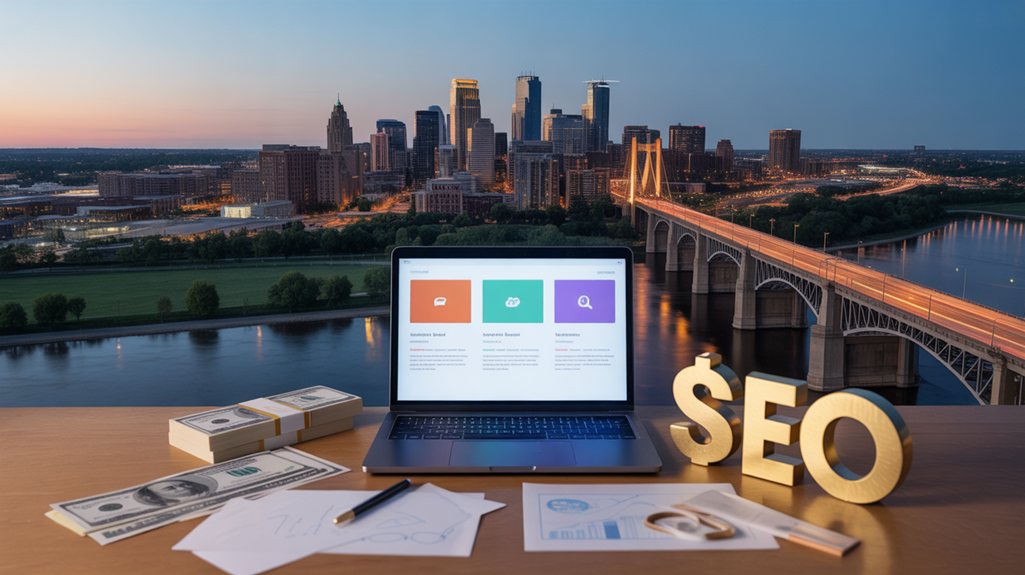
Understanding what to budget for web design and SEO in the Twin Cities can feel overwhelming, especially when prices vary widely and it’s hard to know what you’re actually getting for your money. A professionally designed website typically costs anywhere from $2,500 to $15,000 depending on complexity, while monthly SEO services in the Minneapolis-St. Paul market generally range from $500 to $3,000 based on your competition level and goals. By knowing these benchmarks upfront, you can ask better questions, avoid overpaying for underperforming services, and make strategic investments that consistently drive traffic and revenue to your business.
Typical Web Design Costs
Budgeting for a new website can feel overwhelming, especially when pricing varies so widely across agencies, freelancers, and DIY platforms. Understanding typical costs helps you make smarter decisions without overspending or underinvesting in your digital presence.
| Website Type | Estimated Cost Range |
|---|---|
| Basic Informational Site | $1,500 – $5,000 |
| Small Business Website | $5,000 – $15,000 |
| E-Commerce Website | $10,000 – $50,000+ |
| Custom Enterprise Site | $25,000 – $100,000+ |
These ranges reflect design complexity, functionality, and ongoing support needs. A basic site works for startups, but growing Twin Cities businesses often need scalable, feature-rich platforms. Choosing the right investment tier now prevents costly redesigns later, keeping your brand competitive and your customers engaged longer.
SEO Pricing Breakdown
Just as web design costs vary based on complexity and goals, SEO pricing follows a similar pattern — what you pay depends heavily on the scope of work, your competition, and how aggressive you want your growth strategy to be. Local SEO packages for Twin Cities businesses typically range from $500 to $1,500 per month, covering keyword targeting, Google Business Profile optimization, and on-page improvements. Competitive markets, like legal services or healthcare, often require $2,000 to $5,000 monthly to gain meaningful traction. One-time SEO audits generally run $500 to $2,500, giving you a clear roadmap without long-term commitment. Understanding what’s included in each tier helps you invest wisely, avoid underperforming campaigns, and build a digital presence that consistently drives qualified traffic your way.
Maximizing Your Budget
When you’re working with a limited budget, the smartest move is to prioritize the investments that deliver the highest return first rather than splitting your dollars evenly across every service available. Start with a professionally designed, mobile-friendly website because it’s your digital foundation, and nothing else performs well without it. Then layer in local SEO targeting Twin Cities neighborhoods and keywords your ideal customers actually search. This sequenced approach prevents wasted spending and builds momentum systematically. For example, ranking for “Minneapolis HVAC repair” drives qualified traffic worth far more than a generic national campaign costing twice as much. As revenue grows from early wins, you can reinvest into content marketing, paid ads, and advanced analytics, scaling strategically rather than gambling everything upfront.
The Web Design Features That Turn Minneapolis Visitors Into Customers
Getting Minneapolis visitors to your website is only half the battle, because without the right design features in place, those visitors will leave without taking action. You need clear calls to action that guide people toward contacting you, fast load times that keep local users engaged instead of clicking away to a competitor, and a visual design that builds enough trust to make someone feel confident choosing your business. When these three elements work together, your website stops being just a digital brochure and starts functioning as a genuine sales tool that converts curious visitors into paying customers.
Clear Calls to Action
Every element of your website can look polished and professional, but without clear calls to action (CTAs), your Minneapolis visitors have no obvious next step to take — and most of them won’t create one on their own.
| Weak CTA | Stronger Alternative |
|---|---|
| “Submit” | “Get My Free Quote” |
| “Click Here” | “Start My Project Today” |
| “Learn More” | “See How It Works” |
| “Contact Us” | “Talk to a Minneapolis Expert” |
Strategic CTAs guide visitors toward decisions naturally, reducing friction and increasing conversions. Place them above the fold, after key service descriptions, and near trust signals like reviews. When your CTAs speak directly to what your Minneapolis audience needs, you’ll turn passive browsers into committed customers faster.
Fast Local Load Times
Your CTAs can be perfectly written and strategically placed, but if your website loads slowly, Minneapolis visitors won’t stick around long enough to click them. Studies show that users abandon sites taking longer than three seconds to load, meaning slow performance directly costs you customers. A Minneapolis-focused web designer optimizes your site using local CDN servers, compressed images, and streamlined code that reduces load times considerably. These technical improvements aren’t just about speed, they’re about keeping your audience engaged long enough to convert. When your site loads instantly, visitors trust your brand more, explore deeper into your content, and respond to those carefully crafted CTAs. Fast load times transform passive browsers into active buyers, giving your Minneapolis business a measurable competitive advantage in an increasingly impatient digital marketplace.
Trust-Building Visual Design
Trust is invisible, but its absence is immediately felt when Minneapolis visitors land on a poorly designed website. Cluttered layouts, mismatched colors, and outdated fonts signal unreliability before you’ve said a single word about your business. Your design choices are actually credibility statements, and local customers make judgment calls within seconds. A clean, intentional visual hierarchy guides visitors naturally toward your call-to-action, reducing decision fatigue and increasing conversions. Strategic use of white space, consistent brand typography, and high-quality local imagery creates an immediate sense of professionalism that builds confidence. When Minneapolis visitors see a polished, cohesive design, they instinctively trust your services more. Investing in trust-building visual design isn’t just aesthetic preference, it’s a measurable business decision that directly impacts how many visitors become paying customers.
How to Vet a Minneapolis-St. Paul Web Design and SEO Agency
Choosing the right web design and SEO agency in Minneapolis-St. Paul requires careful evaluation, because not every agency delivers measurable results. Start by reviewing their portfolio for modern, conversion-focused designs that reflect your industry’s unique demands. Ask specifically how they approach local SEO, since ranking for “Minneapolis plumber” or “St. Paul attorney” requires geo-targeted strategies most generalist agencies overlook. Request documented case studies showing traffic growth, lead generation improvements, and revenue impact. Verify they’re transparent about their processes, timelines, and reporting methods, because vague agencies rarely produce consistent outcomes. Check Google reviews and third-party platforms like Clutch for unfiltered client feedback. Finally, schedule a discovery call to assess whether their communication style, technical expertise, and innovation mindset genuinely align with your business goals.
Red Flags That Should Kill a Minneapolis Agency Conversation Fast
When evaluating a Minneapolis-St. Paul agency, certain warning signs demand immediate attention. If an agency guarantees specific Google rankings, walk away — no legitimate SEO professional can promise that. Agencies pushing cookie-cutter website templates without understanding your business goals are wasting your investment. Watch for vague pricing structures that hide unexpected fees, and always question agencies that can’t clearly explain their methodology. If they resist showing past client results or case studies, that’s a serious credibility problem. Outdated portfolios featuring non-mobile-responsive designs signal technical incompetence you can’t afford. Similarly, agencies dismissing local Minneapolis market knowledge in favor of generic national strategies will consistently underperform. Recognizing these red flags early protects your budget and keeps your digital growth trajectory moving forward confidently.
How to Know Your Web Design and SEO Investment Is Actually Working
Measuring the real impact of your web design and SEO investment requires looking beyond vanity metrics like raw traffic numbers and focusing on data points that actually connect to business growth. Track conversions, meaning actual form submissions, phone calls, or purchases, rather than celebrating page views alone. Monitor your keyword rankings for Minneapolis-specific searches, since local visibility directly drives qualified leads through your door. Watch your bounce rate drop as better design keeps visitors engaged longer. Notice whether your cost-per-lead decreases over time, because effective SEO compounds, making each month more efficient than the last. Your Google Business Profile views, website session duration, and returning visitor percentage all reveal whether your investment is building genuine momentum or simply generating noise without measurable results.
Frequently Asked Questions
Do Minneapolis Agencies Offer Bilingual Website Design for Diverse Twin Cities Communities?
Yes, many Minneapolis agencies offer bilingual website design tailored for the Twin Cities’ diverse communities. You’ll find teams fluent in Spanish, Somali, and Hmong, crafting culturally resonant, innovative digital experiences that authentically connect with your target audience.
Can a St. Paul Agency Redesign an Existing Site Without Losing Current Rankings?
Yes, a St. Paul agency can redesign your site without tanking your rankings. They’ll implement 301 redirects, preserve your metadata, and maintain your site architecture, ensuring you keep your SEO equity throughout the entire redesign process.
How Long Does a Typical Twin Cities Web Design Project Take to Complete?
Most Twin Cities web design projects take 6–12 weeks to complete. Your timeline depends on site complexity, content readiness, and revision cycles. Streamlined collaboration and cutting-edge workflows can accelerate delivery without sacrificing quality or innovation.
Should Minneapolis Businesses Use Local Hosting Providers for Better Website Performance?
You don’t need local hosting for better performance. Instead, choose a reputable cloud-based CDN provider like AWS or Cloudflare. They’ll deliver your Minneapolis site’s content faster globally than any local server can.
Do Twin Cities SEO Agencies Offer Month-To-Month Contracts or Require Long-Term Commitments?
Many Twin Cities SEO agencies offer flexible month-to-month contracts, while others require longer commitments. You’ll want to prioritize agencies embracing agile, performance-driven models that adapt quickly to your evolving digital growth needs.